
Choosing the right electric motor is one of the most important decisions in an EV conversion. Most likely you already know this, but electric motors behave very differently than internal combustion engines: they deliver instant torque, have fewer moving parts, and often eliminate the need for a traditional transmission. The motor you choose will determine your EV’s performance, efficiency, and how easy it is to integrate with the rest of your build.
If you’ve been following our SPARK methodology, you already know how to define your vehicle’s operational goals (Select phase) and what it takes to estimate power and energy needs (Plan phase). Now, it’s time to understand how to find a motor that meets those expectations while fitting your budget and mechanical setup.
Understanding Motor Fundamentals
Before we start comparing options, let’s quickly break down what an electric motor does and the types available.
How Electric Motors Work
At their core, electric motors convert electrical energy into mechanical motion using electromagnetism. When current flows through coils in the motor, it generates a magnetic field that interacts with the rotor, causing it to spin and drive your vehicle’s wheels. Basically, the rotor’s magnetic field follows the rotating magnetic field in the stator, which we induce by flowing current through it. Oversimplified explanation, but it covers the basics. In order to better illustrate this, here’s a video from Jared Owen (visit his Youtube Channel here: https://www.youtube.com/@JaredOwen).
Types of Electric Motors for EV Conversions
There are many types of electric motors, and their characteristics differ so much that going into the specifics of them all would be more of a book than a blog article, but here’s a quick breakdown of the main types, and some of their pros and cons in the context of EV conversions.
DC Motors (Brushed & Brushless) – Simple and cost-effective, commonly used in budget-friendly conversions.
AC Motors (Induction & Permanent Magnet Synchronous Motors – PMSM) – More efficient and powerful, often found in modern OEM EVs.
| Motor Type | Pros | Cons |
| Brushed DC Motor | Simple, inexpensive, easy to control | Less efficient, requires maintenance (brush wear) |
| Brushless DC Motor (BLDC) | More efficient, low maintenance, good for lightweight applications | Requires a specific controller, less DIY-friendly |
| AC Induction Motor | High efficiency, great for performance builds, widely available (e.g., salvaged Tesla motors) | Needs a sophisticated controller, can be bulky |
| Permanent Magnet Synchronous Motor (PMSM) | High torque density, used in many OEM EVs | Expensive, complex control requirements |
Key Motor Characteristics to Consider
EV requirements (from your Engineering Decisions) depend mainly on the electric motor characteristics. We need to know how “capable” our motor is to produce the results we are expectin from our build. In order to quantify this capability we need to be able to measure each motor against the others. Below is a simple list of the main characteristics to look out for when selecting a motor that matches your Engineering Decisions as well as your Energy Blueprint.
Power (kW): Determines acceleration and top speed capability.
Torque (Nm): Defines how much force is available at the wheels.
Efficiency (%): Impacts range and heat management.
RPM Range: Higher RPM motors spin faster, so they may need a transmission or reduction gear.
Cooling System: Motors are either air-cooled (simpler) or liquid-cooled (better for high power, more complex for conversions).
How to Match a Motor to Your EV Conversion
Consider Your Power and Torque Needs
Using the Energy Blueprint from the Plan phase, determine how much power and torque your vehicle needs. If your calculations show you need 100kW to meet your acceleration and speed targets, you’ll need a motor that can reliably provide that output without overheating.
Voltage Compatibility
Your motor and battery pack must operate at the same voltage. Most conversion motors run on 48V to 400V systems. The higher the voltage, the lower the current required, which improves efficiency and reduces heat buildup.
Weight and Space Constraints
A 500kg electric motor may work for a heavy truck but might be overkill for a small coupe. You’ll have to make sure the motor fits in your engine bay or mounting space.
Mounting and Integration
Mounting an electric motor in an existing chassis requires planning, fabrication, and in some cases, trial and error. Unlike internal combustion engines, electric motors are often much smaller for the same power output, meaning they may not align perfectly with existing mounting points. There are two primary approaches: keeping a manual transmission (if the donor vehicle had one) or opting for a direct-drive setup. Automatic transmissions are not recommended for simple DIY EV conversions since those are more complex and require some sort of controls. Keep it simple for now!
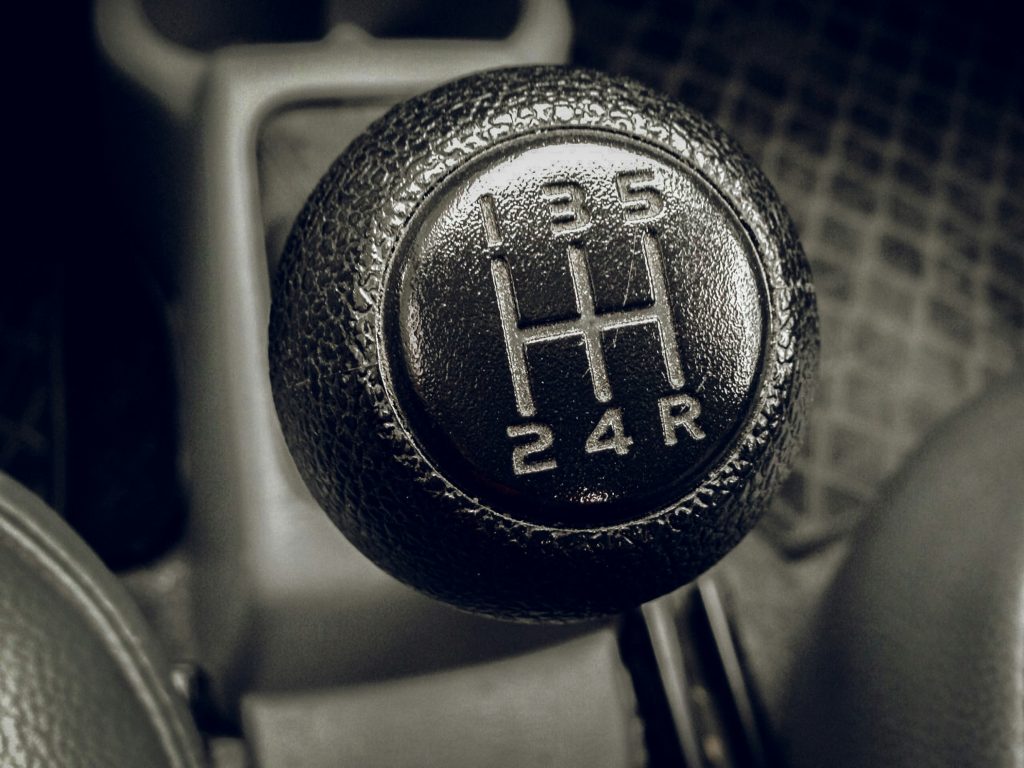
If keeping a manual transmission, you’ll need an adapter plate and coupler to connect the motor to the existing gearbox. This allows you to retain multiple gear ratios, which can be beneficial in some builds, particularly for lower-powered motors. However, EV motors produce peak torque at very low RPMs, meaning shifting gears is often unnecessary, and some conversions end up using only one or two gears. Additionally, you must determine the optimal gear to use for normal driving, which requires understanding the motor’s torque-speed curve.
If going direct drive, the motor is connected directly to the differential without a gearbox. This setup is common in high-RPM motors like Tesla drive units, which use a fixed reduction ratio instead of a multi-gear transmission. This simplifies the build by removing unnecessary mechanical complexity but requires careful selection of the final drive ratio to balance acceleration and top speed. A poorly chosen ratio can leave your EV feeling sluggish off the line or unable to reach highway speeds efficiently.
Matching the Motor’s Power Curve to Vehicle’s Max Speed & Gear Ratio
If keeping a transmission: Choose a gear ratio that lets the motor operate efficiently at cruising speeds. Example: If your motor maxes out at 6,000 RPM and you need your wheels to spin at 4,000 RPM at highway speeds, the right gear ratio can bridge the gap. You want the motor to spin at it’s most efficient point of operation, with the right amount of torque.
Let’s say the motor has to spin at 3,450 rpm for it to be at it’s highest efficiency with the right amount of torque for that highway vehicle speed (from Energy Blueprint calculations). Motor speed divided by wheel speed will give you the correct transmission ratio.
3,450 motor rpm divided by 6,000 wheel rpm = 0.57:1 ratio. In other words, you want your motor shaft to spin 0.57 revolutions for every time the wheels spin 1 full revolution.
Check the transmission ratios from the manufacturer, and select the appropriate one. If using a C5 corvette manual transmission, this equates to using 5th gear for highway cruising in your hypothetical EV conversion we just calculated.
If going direct drive: The motor must reach your desired top speed using only the final drive (axle ratio). Example: Tesla drive units spin up to 16,000 RPM and use a fixed gear reduction. This means that the wheels are spinning at less than 16,000 RPM at the motor’s maximum speed. The same method for calculating manual transmission ratios in the previous example applies to direct drive.
Comparing Common EV Motor Options
OEM Motors vs. Aftermarket Options
Recycled Tesla, Nissan Leaf, Chevy Bolt motors – Great performance, but require advanced controllers and programming. Going this route can be challenging, but very rewarding in terms of both performance and overall project satisfaction. This option is recommended for those diving into EV conversions with the main purpose of creating something new, having fun and tackling interesting DIY technical challenges. It might even be the cheapest option if you’re willing to put in the work!
New NetGain, Hyper 9, AC-50, or HPEVS motors – Designed for DIY conversions, easier to integrate but more expensive. These options tend to be plug and play in certain ways, much easier to deal with than recycled drive units, with very decent performance, but it comes at a higher ticket price. Remember, the easier it is, the more expensive something tends to be: someone already did part of the work for you, and that costs! If your desire is to have a finished project, more so than tackling complex challenges in every step of the EV conversion process, this is for you. Choosing a plug and play option does not make the rest of the conversion process any easier or less fun, anyway. You have to enjoy the conversion process, not suffer through it!
Budget vs. Performance
DC motors are generally cheaper but less efficient, which means you’ll get less range, performance, and more heat buildup. Depending on your Engineering Decisions from the Select phase, you might not care that much. If you’re going for a summer-only, weekend-only, short range cruiser, this might be enough, for example.
Salvaged OEM motors can be powerful but require technical expertise. This makes conversions more complex, which could be a good or a bad thing. Do you want the technical challenge, or do you want the final product as easy as possible?
High-end aftermarket motors offer plug-and-play solutions but at a premium cost. I would recommend these options if you have the budget and if your final objective is more performance oriented, like racing.
Engineering Considerations When Choosing a Motor
Once you’ve selected a motor, there are still a few key factors to consider before finalizing your choice. Picking a motor isn’t just about power or torque; it’s also about how well it integrates with the rest of your system. Here are some of the main engineering concerns that can make or break your EV conversion.
Thermal Management: Keeping the Motor Cool
Electric motors generate heat while operating—some more than others, depending on efficiency and load. Managing this heat is crucial to prevent damage and maintain performance.
Air-Cooled Motors: Some EV motors rely on airflow to stay cool. This is the simplest cooling method and requires minimal extra components. Many lower-power motors, like those used in golf carts or small EVs, are air-cooled. However, they may struggle with cooling under high loads or during extended high-speed operation.
Liquid-Cooled Motors: More powerful motors, like those used in OEM EVs (Tesla, Nissan Leaf, etc.), often use liquid cooling. These systems circulate coolant through channels inside or around the motor to absorb heat, similar to how an ICE vehicle’s radiator system works. Liquid cooling is more complex but allows for sustained high performance without overheating.
For most DIY conversions, the choice comes down to intended use (remember your Engineering Decisions?). If you’re building a small, low-power city car, air cooling may be enough. If you’re aiming for high performance or heavy-duty use, liquid cooling is worth the extra effort.
Controller Matching: The Brain of the Motor
A motor alone won’t do anything without a controller. The controller (sometimes called an inverter for AC motors) is what takes the electricity from the battery and converts it into a form the motor can use.
Different motors require different types of controllers, and they must be compatible in terms of:
Voltage & Current Handling: Your controller needs to match the motor’s voltage and handle enough current to supply full power without overheating. If your controller can handle less current than the motor’s maximum current, then you are not getting the peak power it might generate!
Motor Type: AC motors require an inverter-style controller, while DC motors use a simpler controller that adjusts voltage and current.
Programmability: Many modern controllers allow tuning for acceleration curves, regen braking levels, and efficiency settings. This can be useful if you want to fine-tune your EV’s driving experience.
Choosing a controller can be just as important as choosing a motor, as the wrong one can limit performance or even damage your system. Plug-and-play style motors for EV conversions generally come with their own controller and software for programming it. When using recycled motors there are less options available and sometimes a little tinkering is required. What seems more fun, affordable and interesting to you?
Gear Ratios & Final Drive: Does Your Motor Need a Gearbox?
Some motors need a transmission, others don’t. This is one of the biggest questions for DIY converters, and the answer depends on the type of motor you’re using.
Some DIY builders choose to keep the stock transmission since it might be easier in terms of work: one less component to remove or replace. This allows the driver to select the ideal gear for higher speed, lower torque, or lower speed, higher torque (this is what gears in a transmission do: they change the ratio between speed and torque). However, many conversions end up staying in 2nd or 3rd gear permanently, since EV motors provide ample torque at low RPM. If using an aftermarket motor that’s plug-and-play (like a Hyper 9 or NetGain Warp 9), keeping the transmission might be beneficial.
High-RPM motors (like Tesla units) don’t need a transmission because they can spin fast enough to cover all speeds without shifting. In this case, the final drive ratio (axle gearing) becomes extremely important. The motor must be able to provide enough torque at low speed while still allowing high enough RPM for highway travel. Most conversions that use recycled Tesla drive units use the whole unit, which includes the motor and gears, so no need to calculate anything there.
Regenerative Braking Capability: Getting Some Energy Back
Some EV motors support regenerative braking (regen), which allows the motor to act as a generator when slowing down, feeding power back into the battery. This not only extends range but also reduces wear on traditional brakes. The way the vehicle drives might also be impacted: advanced controllers that support regen allow for what’s called “one-pedal driving”. One-pedal driving means that accelerating and braking can be done with only the accelerator pedal, leaving the brake pedal for emergency stops and hard braking only. Remember, the friction brakes used on normal cars should still be part of your EV conversion! Regen does not replace friction brakes.
AC motors (like those in Teslas, Nissan Leafs, and Chevy Bolts) almost always support regen braking. Some brushless DC motors also support regen, but not all. Brushed DC motors typically do not support regen. If you want regen braking, make sure your controller and battery system can support it as well.
Real-World EV Conversion Motor Selection Process
This is, in essence, how the process of EV motor selection would look like:
Step 1: Define Performance Goals
This is done in the Select phase of SPARK.
Step 2: Calculate Power Needs
This comes from the Plan phase of SPARK.
Step 3: Compare Motor Options
Look for a motor that meets your peak power expectations. It doesn’t matter if it’s AC, DC, recycled or plug-and-play, it has to meet your peak power requirements first. Once a pool of options is at hand, the decision making process starts. Budget is a big constraint for most DIY EV conversions, so consider that first. Then comes ease of installation and availability of controllers. These decisions are part of what defines your conversion’s personality so spend some time thinking about this step.
Step 4: Check Torque-Speed Curve & Determine Gearing Strategy
Once a motor candidate has been selected, it’s time to look at the specifications of it (the spec sheet). Here you will focus on the torque-speed curve, which basically tells you how much force (torque, in this case) the motor can produce at different speeds. Detailed calculations of maximum vehicle speed, tire size, and force requirements are needed here, but these are out of the scope of today’s article.
Key takeaway here is: you need to see if the motor can produce the traction force your conversion needs, when it needs it. Different gear ratios manipulate at what vehicle speed the motor produces more or less force. So even if the motor seems to produce the torque required at very high RPM, keep in mind that you can select a gear ratio that makes it usable: it can spin faster than the wheels and still work!
Step 5: Purchase and Prepare for Installation
Once the motor has been selected, it’s time to purchase it and prepare for installation. This means understanding the size of it, mounting points, and how it’ll be mounted in the vehicle. Does it require an adapter plate for mounting directly to the transmission or differential? If you’re installing a recycled drive unit from an OEM EV, does it require fabrication or adaptation in your donor vehicle’s chassis to mount it and connect it to the wheels? What kind of cables are required to connect the controller to the motor, if any? You also have to think about cooling: air or liquid? What kind of air flow, cooling lines and radiators are needed? Planning ahead and preparing for the installation saves time, effort and money!
Final Thoughts
Selecting an EV motor for your conversion can be done in many ways, some more effective than others. Some conversions use whatever motor can be afforded, some use whatever motor was available, some even use whatever motor could fit. Yet, selecting the correct motor based on what you expect the conversion to achieve is the most effective way of doing it. Think of it as an upfront investment: you plan ahead, know what to expect, and select the component that you know will meet your expectations. Imagine going through the whole EV conversion process just to find out it will not accelerate as much as you wanted to, or that it wouldn’t even be driveable due to an incorrectly selected motor? That sounds like such a waste of time, money and effort.
Even though some math and calculations are required to actually select a motor, we hope this article helps illustrate what the process might look like. Future articles will now delve into how to select the other components for your conversion: batteries, charging equipment, and auxiliary systems.
This is the first of 3 articles that comprise the Architect phase of SPARK, so stay tuned for the rest!
Join the conversation: share your thoughts, ask questions, or tell us about your EV conversion journey or plans in the comments below. We’d love to answer any questions we can and/or learn from your experience.

Press clutch to shift gears – a story
Cold air, clear skies and sunlight. My morning workout about to start, taste of cherry…
End of Line – A story
Ah, the beauty of an assembly plant. Cars roll out by the minute, synchronized with…

PLAN – Designing an EV conversion from scratch: a SPARK walk through
Now that we’ve defined what we want this conversion to accomplish, we can start working…

Cold Trips – a story
Boring. Dark. Cold. The industrial warehouse where we sat was furnished to resemble a corporate…

Select – A SPARK walkthrough :Designing an EV conversion from scratch
Ah, EVs. Magical to some, blasphemous to others. Few topics divide the automotive world quite…

Stalls – a story
It was a chilly Pennsylvania morning. Jamie was late to work again; he forgot to…