
EV conversions have always been a niche pursuit, but their purpose and appeal have evolved significantly over the years. Two decades ago, people turned to EV conversions for practical reasons like reducing fuel costs, minimizing environmental impact, or achieving energy independence. Today, with used electric vehicles like Tesla Model 3s available from Hertz for under $20,000 USD and capable of lasting hundreds of thousands of miles with minimal maintenance, the question arises: why go through the trouble of converting a combustion vehicle to electric at all?
After spending the last decade as an automotive engineer, I have developed a particular interest in EV conversions for a simple reason: they don’t seem to make any sense from a practical standpoint! Though I was always interested in this topic since I was in college, I now believe that EV conversions are more about artistry and self-expression than necessity. Converting a vehicle might be a way to celebrate the tinkering spirit, make a statement, and reimagine a car’s personality. Whether it’s transforming an old V8 truck into a sleek electric powerhouse or electrifying a quirky 90s hatchback to turn heads at Cars and Coffee, EV conversions are an art form. And art is important for the enjoyment of life.
What Is an EV Conversion?
At its core, an EV conversion involves replacing the Internal Combustion Engine (ICE) and related components of a vehicle with an electric motor, batteries, and supporting electronics. However, in most cases, the goal isn’t just to make the car run on electricity but to create something unique and personal.
For me, EV conversions represent the ultimate blend of engineering and creativity. I see conversions as a way to reimagine what a car can be while embracing modern technology. Unlike designing an EV from scratch, a conversion involves understanding the original design philosophy, features, and use case of the donor vehicle, and modifying them through the use of an electric powertrain. Was the donor vehicle a slow, gas-saving, cheap hatchback? Not anymore. It’s now a quirky, silent, and potentially quicker vehicle. If the conversion was done by the owner, it might now be an object of pride too.
Why Convert a Vehicle to Electric in 2025?
While I could write the typical list of pros and cons and risk sounding like a bot, I believe there’s much more at play in an EV conversion than that. Yes, conversions can be better for the environment, have lower costs of operation than their donor ICE vehicles, and MIGHT be (sometimes) cheaper than buying a new EV, but if you want to read about that, then ChatGPT is where it’s at. I believe that converting an EV should be all about taking risks and tackling challenging projects that have an emotional value. For those of us who have modified our own cars, the feeling of pride and accomplishment is way stronger than what the vehicle can do. Supercharging my FG9 Civic made it a clutch-burning machine that was a lot more unreliable than what I started out with, but I will remember that car until the day I die because of what it made me feel, the effort it took, and all the learning experiences I was fortunate enough to derive from it.
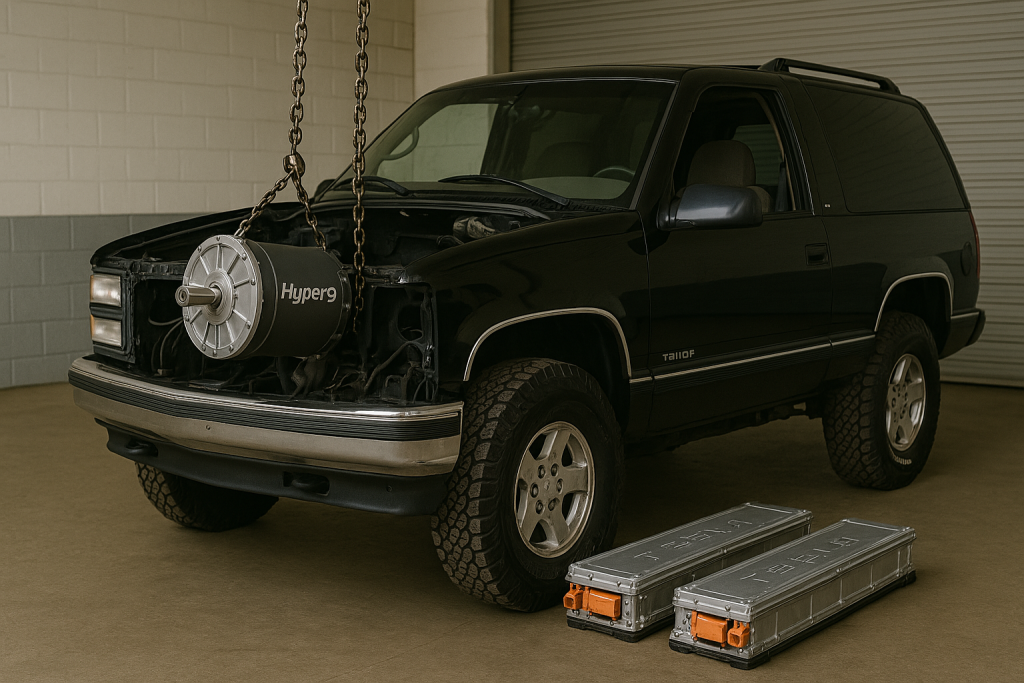
So back to the important question: Why convert a vehicle to EV?
1. Converting is A Form of Automotive Art
EV conversions have become a canvas for creativity. They’re about taking something old and making it new, not for mass appeal but for personal satisfaction and showcasing the spirit of innovation. It’s an opportunity to create a vehicle that serves a purpose and evokes a special feeling you won’t get from a dealership.
2. Reimagining a Vehicle’s Identity
Converting a vehicle can dramatically change its character. Imagine taking a rugged, classic truck and reimagining it with an electric powertrain that launches it to 60 mph (96.5 kmh) in 2 seconds while maintaining its charm. It’s not only about replacing one technology with another; it’s about exploring a new way to express a vehicle’s character and telling a story that blends heritage with innovation.
3. Engaging with the Enthusiast Community
Showing up at a car meet with an electric-converted classic is an instant conversation starter. Will everyone like it? No. But what is art if not a craft that elicits emotions from human beings? I believe the engagement in the community comes from starting conversations and opening up to different things. Not everyone has to convert their ICE vehicle into an EV, but those who do bring a fresh perspective that can spark meaningful discussions and connections. For example, I do not want to strip my car bare, straight pipe it, and make it look like a car straight from Mad Max, but I do appreciate the effect a car like that has on any car show or event. Keep them coming! The community will most definitely appreciate your conversion in their own unique way.
4. Because why not?
Why not spend months and thousands of dollars working on a project car that’s NOT going to be the most economical, practical, or rational decision we can make? Life doesn’t have to be all practical and methodical all the time. The more passionate we are about our lives and what we spend our time with, the more we can enjoy it. Think of an EV conversion as therapy, but better.
The EV Conversion Process
When doing real engineering, it is imperative to sit down and think things through before we start building. This is the “measure twice, cut once” mentality, and it is the cornerstone of automotive brilliance.
No automaker, tuner, builder, or race team can be successful without planning their work when building a car, and it is our mission here at The Torque Academy to guide you through the design process so your EV conversion is successful, if you ever decide to start one. Once the design is done, getting your hands dirty should be a lot easier, smoother, and more enjoyable. And although nothing is perfect and no design is finalized until built, we believe going through this whole process will give us a higher probability of ending up with a good, reliable conversion that meets your requirements, all while having a great time and a cool story to share with friends and family.
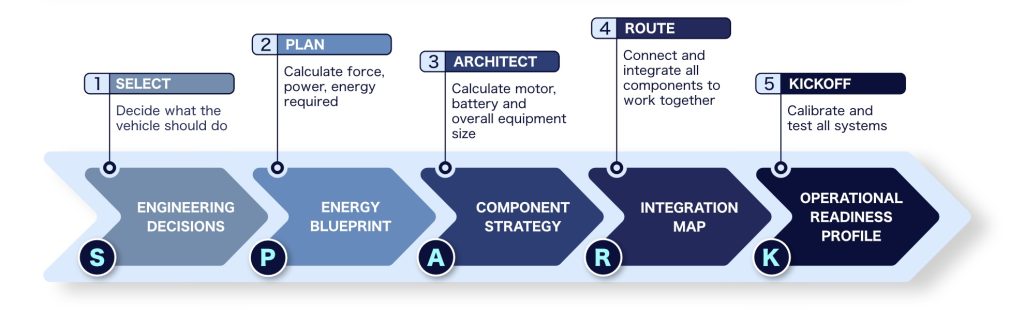
In order to make the conversion process easier to understand, we have come up with a framework using the SPARK acronym:
Step 1: Select
Selecting the right vehicle is not just about personal preference—it’s a series of choices that will define the success of your conversion. Begin by considering the use case of the vehicle: Will it be a commuter car, a weekend cruiser, or a utility vehicle for towing and hauling? This decision will influence key parameters like range, performance, and payload capacity.
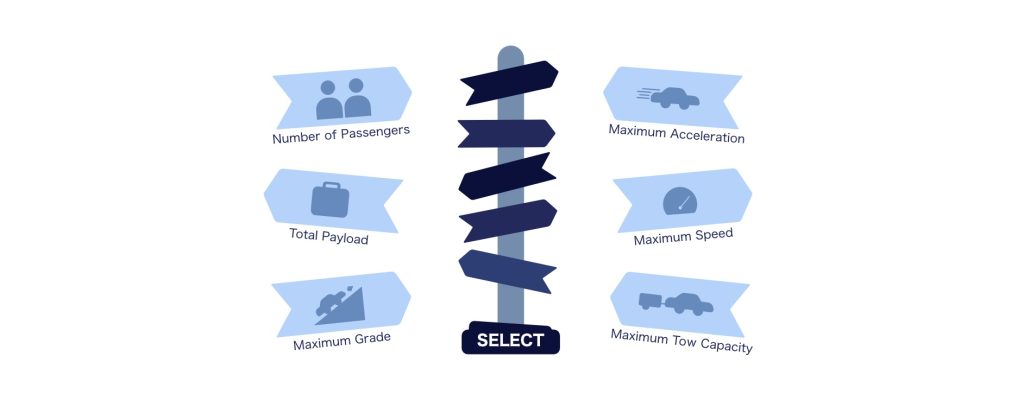
Some of the decisions you’ll need to make are the following:
- Number of Passengers: Maximum number of people to carry in the vehicle.
- Total Payload: Includes cargo and any additional equipment.
- Maximum Grade Expected: Consider the steepest inclines the vehicle will encounter.
- Maximum Acceleration: Be realistic here. Do you want a rocket that hits 60 mph in 2 seconds, or are you okay with a 7-second to 60 acceleration?
- Maximum Vehicle Speed: How fast do you want it to go?
- Maximum Towing Capacity: How much do you want to be able to tow?
These are some of your Engineering Decisions and they will shape the whole conversion process: they will dictate donor vehicle, component selection, sizing, and overall design philosophy. Cost too, so keep it real here.
Step 2: Plan
You’ll need to know how much energy your vehicle will use in order to meet the requirements from your Engineering Decisions. This step involves calculating the effects of things like weight, aerodynamics, desired range, and performance goals in the overall energy consumption of your vehicle. These calculations form the foundation for choosing components like the motor and battery pack. This is your Energy Blueprint.
Step 3: Architect
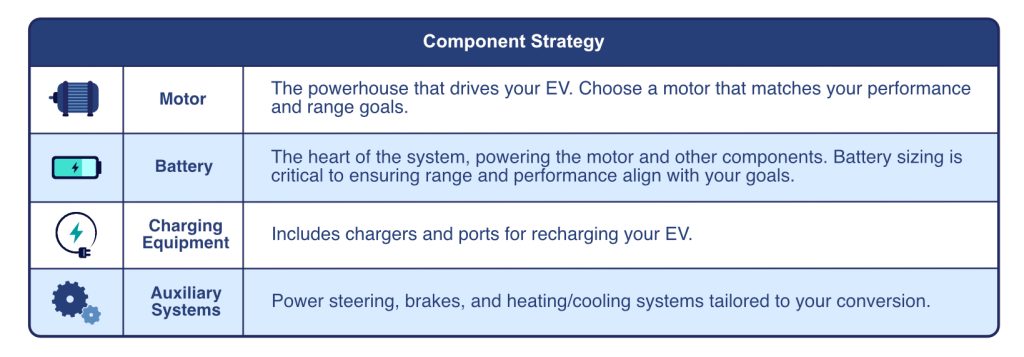
Once you have your Energy Blueprint, the next step is to select the components that meet your needs. This will result in your Component Strategy.
Step 4: Route
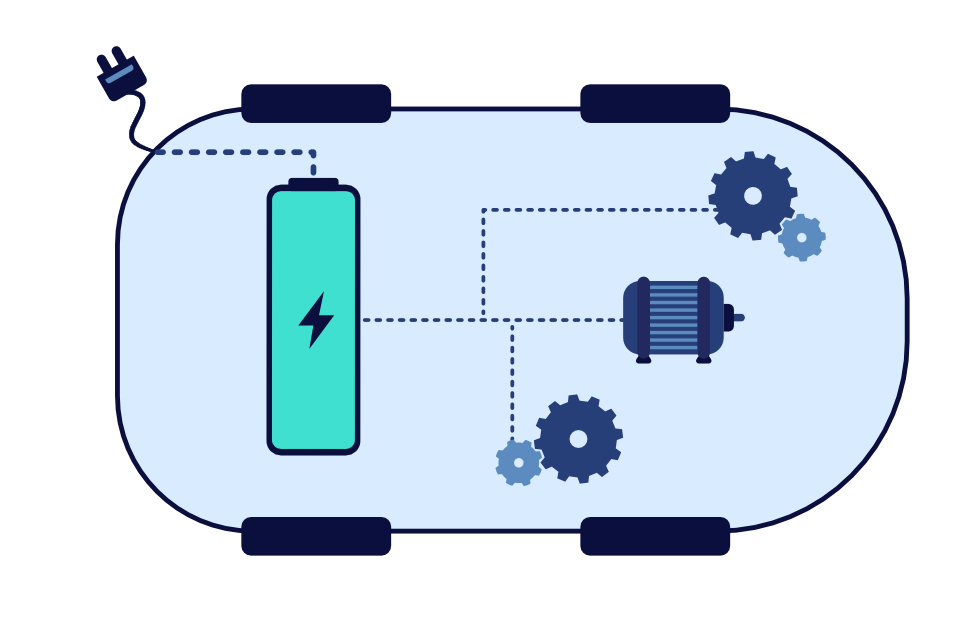
How is everything connected and interacting? Routing information and power through all the components is a meticulous but rewarding process. Proper wiring ensures the safety and efficiency of your EV. This step involves creating wiring diagrams, organizing circuits, and ensuring all components communicate effectively. This is your Integration Map.
Step 5: Kickoff
With everything installed, the final steps are calibration and testing. It all looks great mounted, bolted, and connected, but does it work? How do you evaluate that? This phase ensures your EV operates reliably and meets your performance expectations. Here you will focus on calibration and validation of all systems. Calibration fine-tunes the motor, controller, and auxiliary systems to work seamlessly together: it programs the system to drive and operate the way you want it to. Validation involves real-world testing to confirm the vehicle is ready for regular use. The Operational Readiness Profile acts as a framework to know what to test, and how to determine if it passes or not. It’s like a checklist to make sure you didn’t miss anything important.
So to keep things simple, here’s a summary of the conversion process:
SPARK
S – Select: Decide what the vehicle should do -> Engineering Decisions
P – Plan: Calculate force, power and energy required -> Energy Blueprint
A – Architect: Calculate motor, battery and overall equipment size -> Component Strategy
R – Route: Connect and integrate all components to work together -> Integration Map
K – Kickoff: Calibrate and test al systems -> Operational Readiness Profile
My Perspective on EV Conversions
While I have not personally completed an EV conversion yet, my experience in the automotive industry has given me a deep understanding of the rigorous planning, integration, and problem-solving processes required for complex automotive projects, which I believe translates seamlessly into the EV conversion landscape.
I approach this EV Conversion topic not as the ultimate expert, but as a student eager to learn and share insights along the way. My goal is to combine my automotive engineering background with this community’s spirit of innovation, sharing knowledge and learning through collaboration. Through this series of articles, I hope to preserve automotive culture while embracing the exciting possibilities of EV technology. Before continuing with this topics I want to make something clear: I do not believe in technology polarization. I love EVs as much as I love Diesels, V12s, and straight-piped LS swaps.
The Future of EV Conversions
While EV conversions may never be mainstream, their appeal as a creative and technical pursuit is undeniable. As technology advances, the possibilities will only grow. Whether you’re drawn to the challenge, the artistry, or the engineering, conversions offer a unique way to engage with the automotive world. Something different. Not everything should be twin-turbo inline 6s, supercharged V8s, or LS-swapped Miatas. Nothing wrong with any of those things, but change it up for the sake of the community.
I do believe, though, that there are certain use cases where EV conversions can be economically sound, like fleet owners in certain parts of the world where keeping a certain type of vehicle functional while lowering its cost of ownership is important. There might be more cases where EV conversions can be useful in business, but these topics are out of the scope of this series of articles—at least for now.
Through The Torque Academy, my team and I will continue to write articles about how to design an EV conversion, among many other automotive topics, hoping to guide and encourage the DIY community to create, understand, and feel what they love: cars.
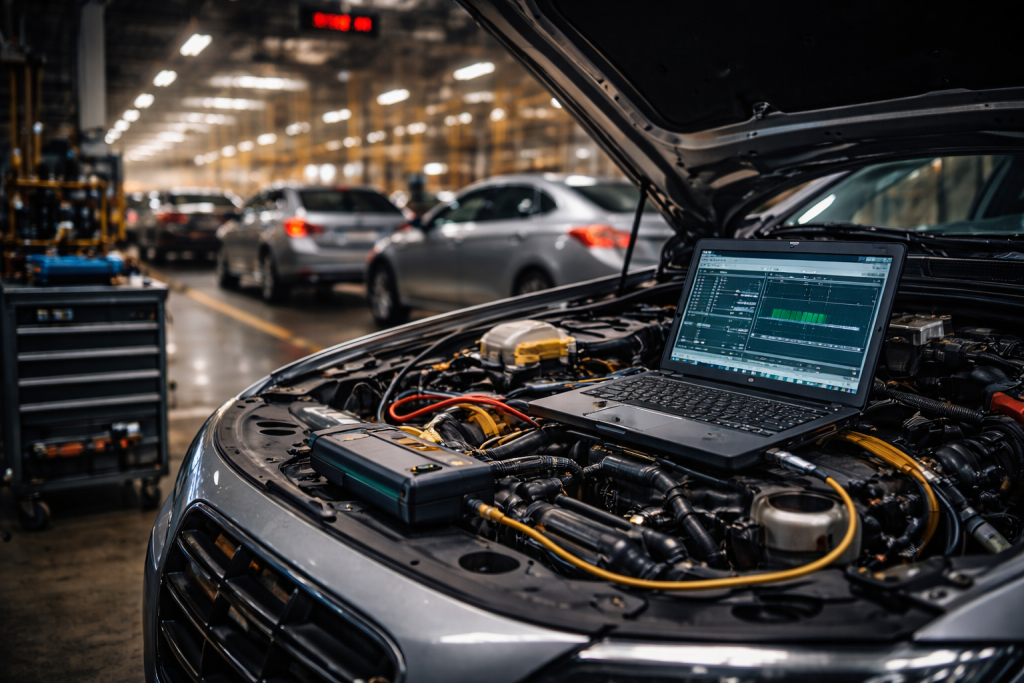
End of Line – A story
Ah, the beauty of an assembly plant. Cars roll out by the minute, synchronized with…
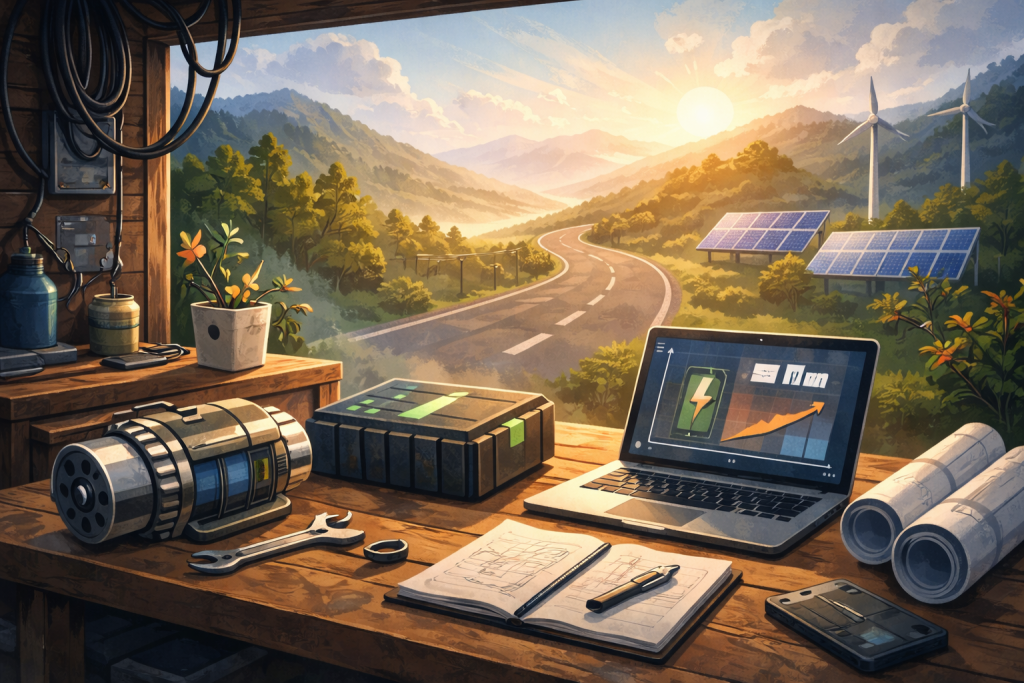
PLAN – Designing an EV conversion from scratch: a SPARK walk through
Now that we’ve defined what we want this conversion to accomplish, we can start working…

Cold Trips – a story
Boring. Dark. Cold. The industrial warehouse where we sat was furnished to resemble a corporate…

Select – A SPARK walkthrough :Designing an EV conversion from scratch
Ah, EVs. Magical to some, blasphemous to others. Few topics divide the automotive world quite…

Stalls – a story
It was a chilly Pennsylvania morning. Jamie was late to work again; he forgot to…
Redemptive Voltage: 5 EV Conversions That Give Souls To Their Donors
Some cars are born with a soul. A few are rowdy and unhinged, some are…